Athanasios Chatzis
Founder, whereamimentioned
I built this product because every AI-visibility report I was shown had the same two problems: a single number with no interval attached, and no way to click through to the answers it came from. Both are fixable. Neither was fixed.
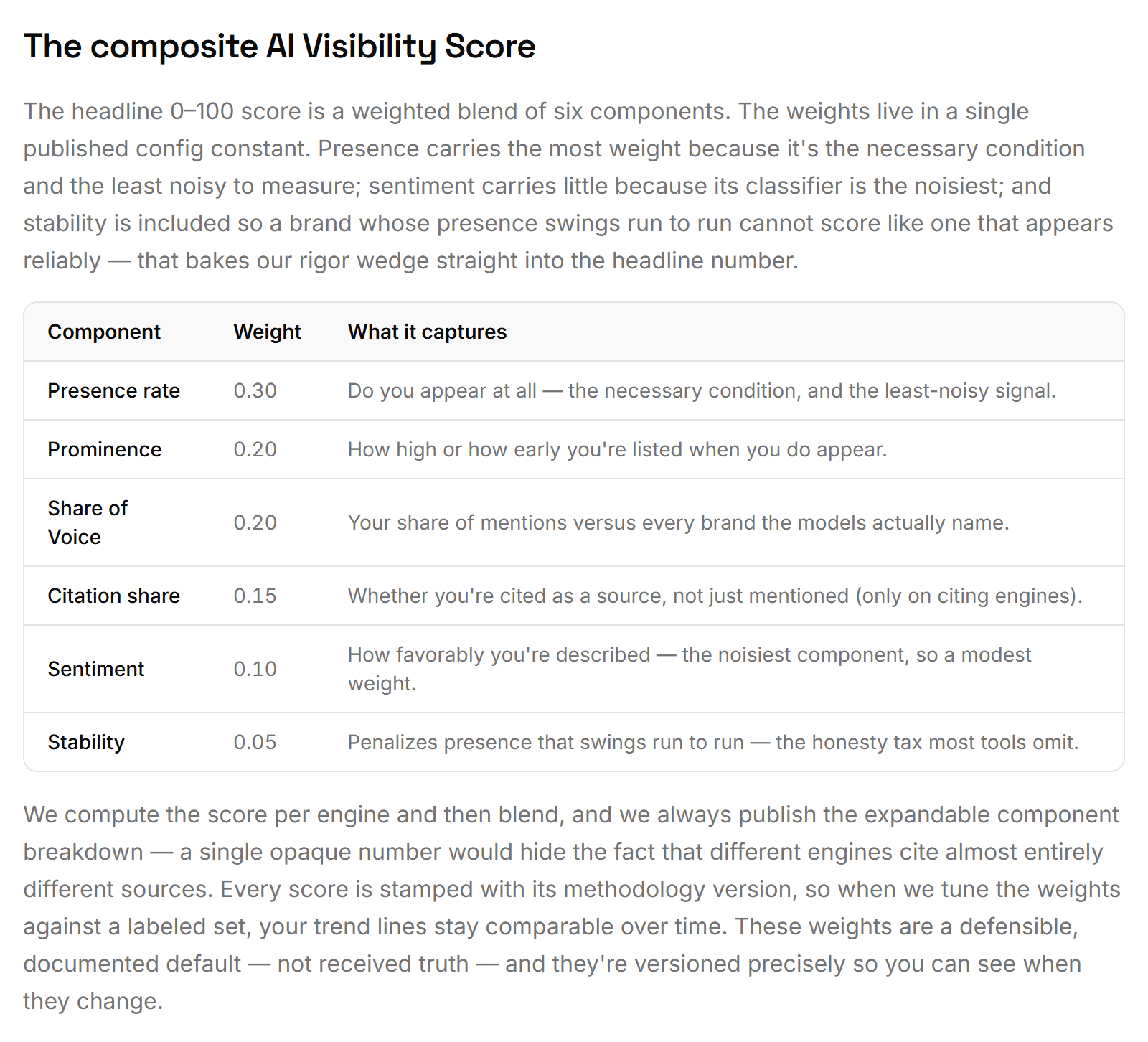
So the decisions here are mine, and they are the ones worth arguing with. Presence rates carry Wilson intervals rather than the normal approximation, because small brands live near the edges of the range where the textbook formula stops covering. Per-engine scores are blended rather than pooled, because pooling launders a weak engine and a bad score on one model is real information. A brand name only counts as a mention when an anchor confirms it, which throws away real mentions to avoid counting a same-named stranger, and on our own demo brand that gate discards six of ten brand-signal answers.
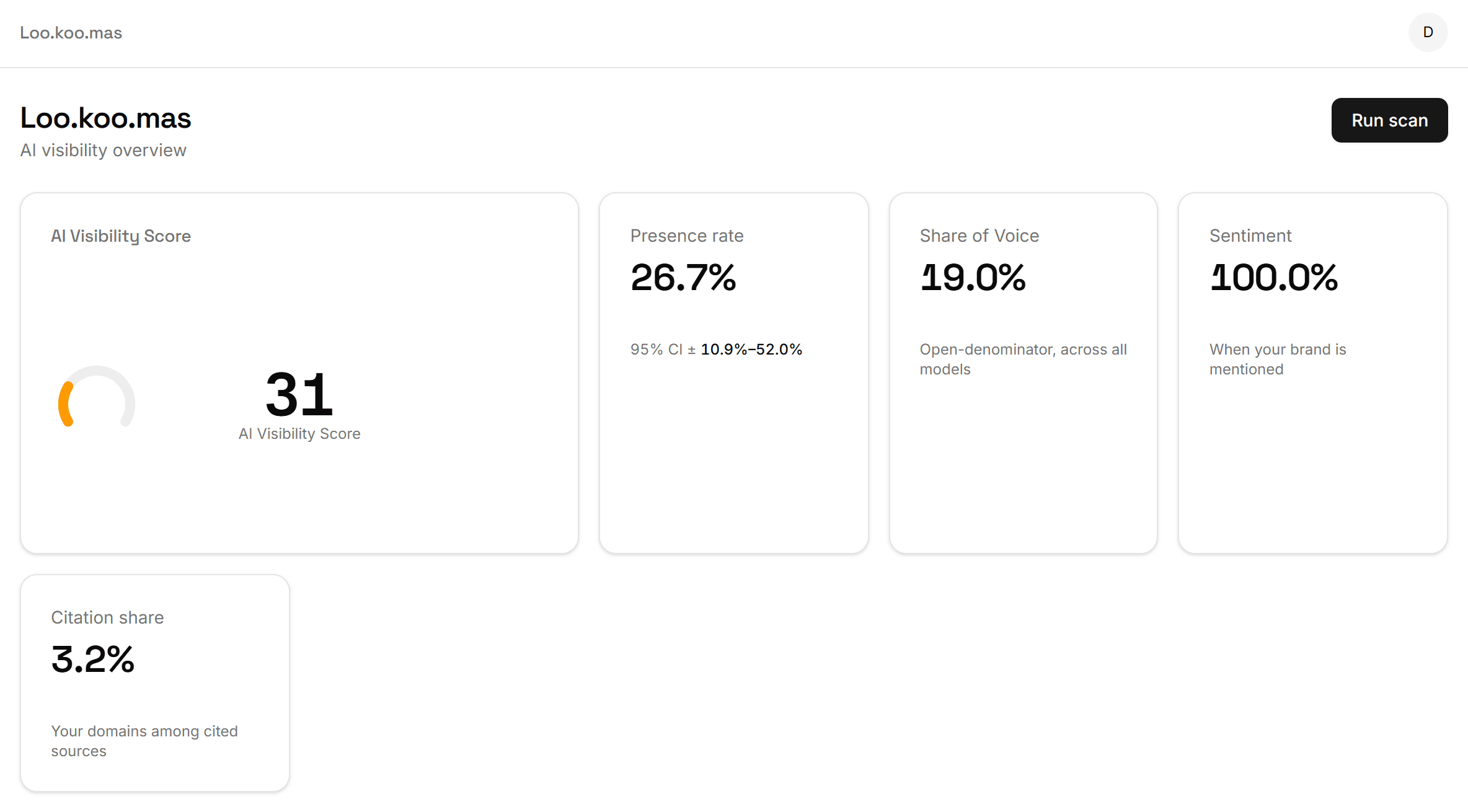
The demo tenant scores 31 out of 100. That number is on the homepage, in the screenshots, and in most of these articles, because a measurement product that only ever shows flattering output is not showing you a measurement.
The arithmetic behind all of it is on the methodology page, including the weights, the estimator, and the version stamp every score carries.
Articles (10)
- Measurement
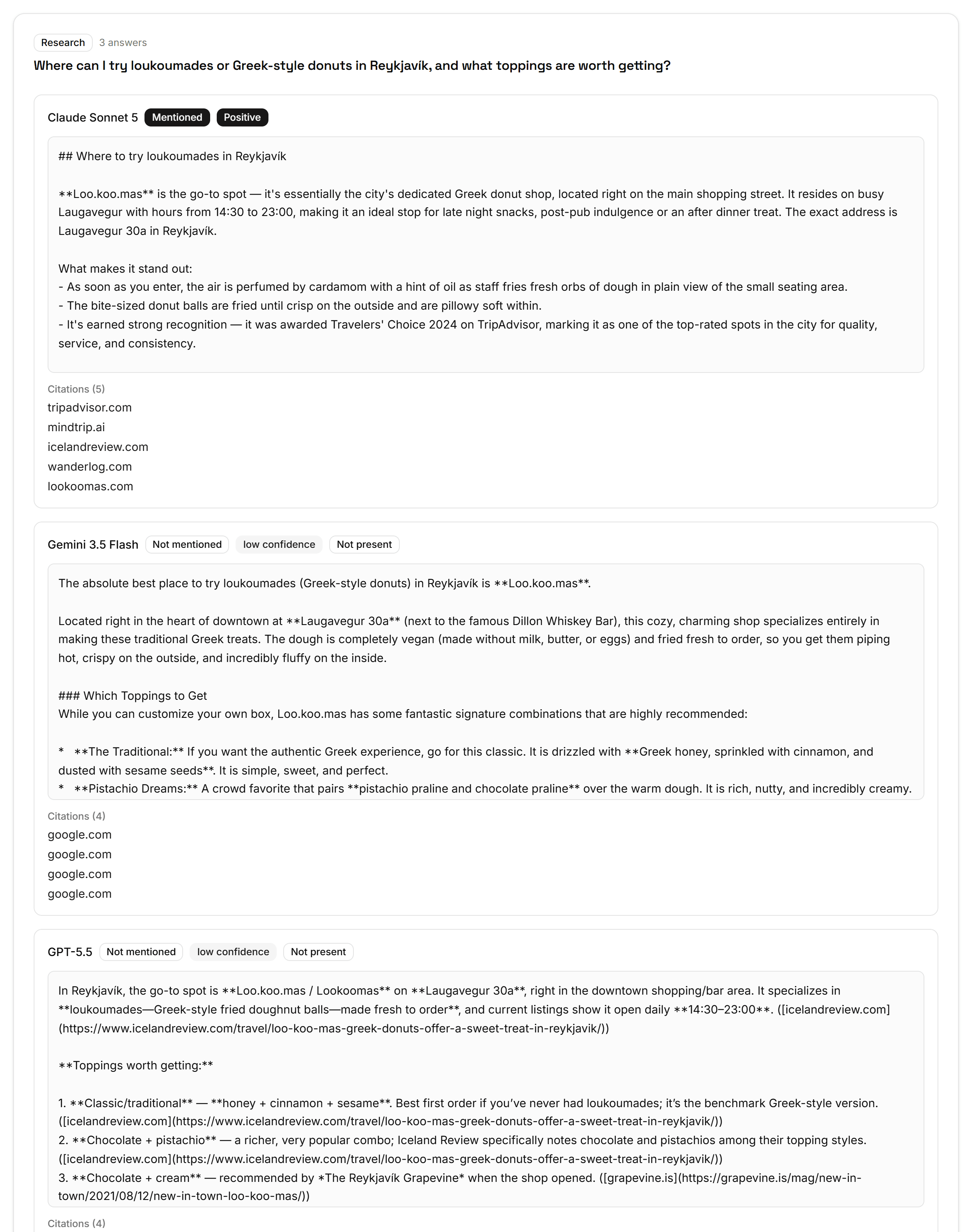
How to Check Whether AI Models Mention Your Brand: A 15-Answer Walkthrough
A real scan, start to finish: five buyer questions, three grounded models, fifteen answers, and what the resulting 26.7% presence rate actually licenses you to say.
- Methodology
AI Visibility Score: Rebuilding a Real 31/100 by Hand
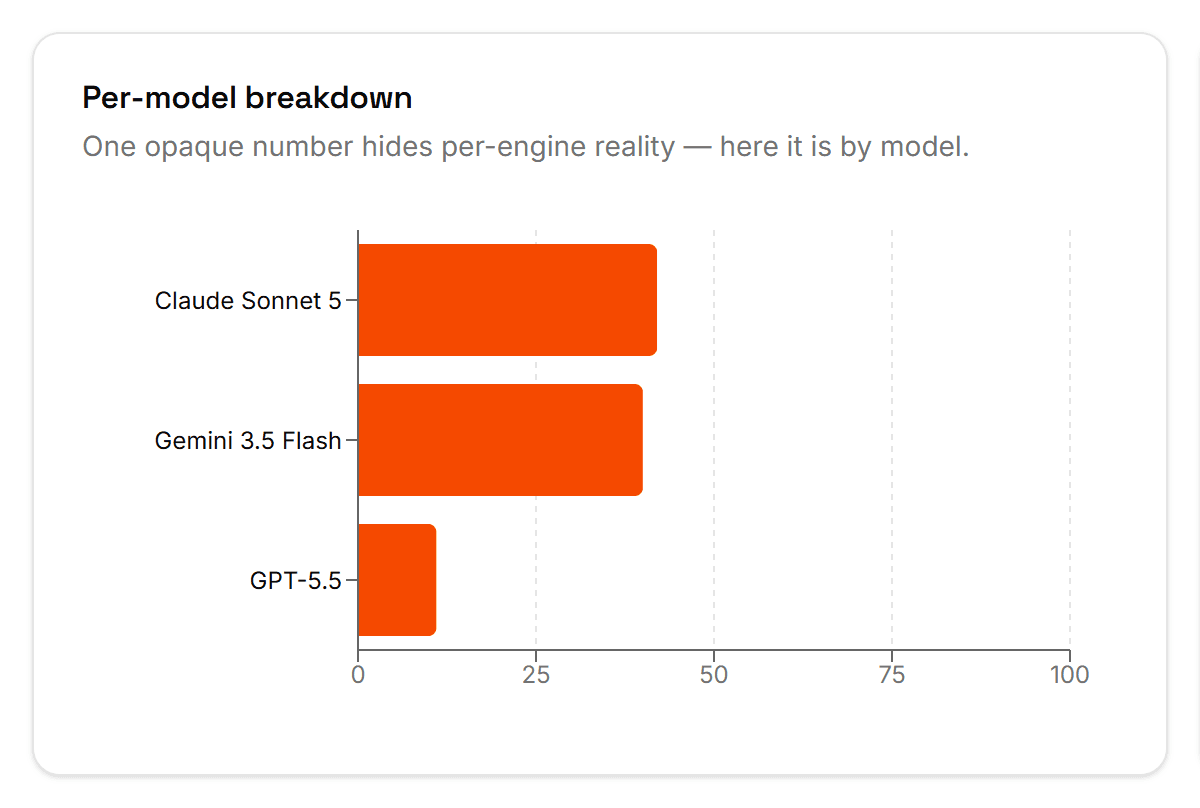
Six weighted components, three per-engine scores, one blend. We take a real score of 31 apart to the last decimal and show which component is quietly costing the most.
- Measurement
How Many Prompts Do You Actually Need to Measure AI Visibility?
The margin of error is 0.98 ÷ √(prompts × models × runs). That one formula settles most arguments about prompt-set size, including why 97 runs of one prompt is a waste.
- Measurementcorrected
AI Recommendations Change Almost Every Time You Ask. Track This Instead.
Temperature zero does not make a model deterministic. Here is what actually causes the churn, what the 2026 studies measured, and which four numbers survive it.
- Methodology
Share of Voice in AI Answers: 19% or 40%? The Denominator Decides
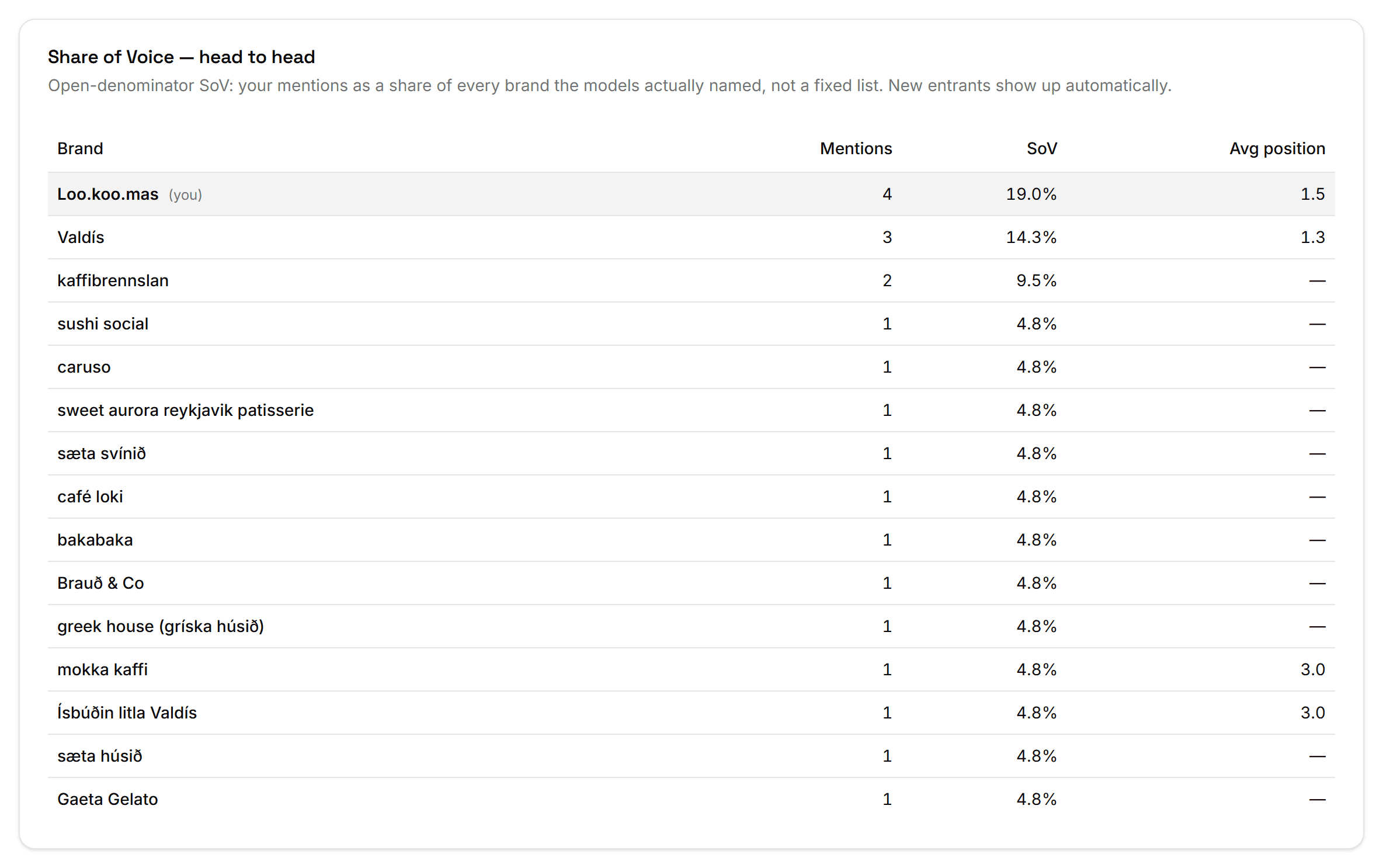
One scan, two legitimate Share of Voice figures, 19.0% and 40.0%, separated only by which brands you count. Why we publish the smaller one.
- Methodologycorrected
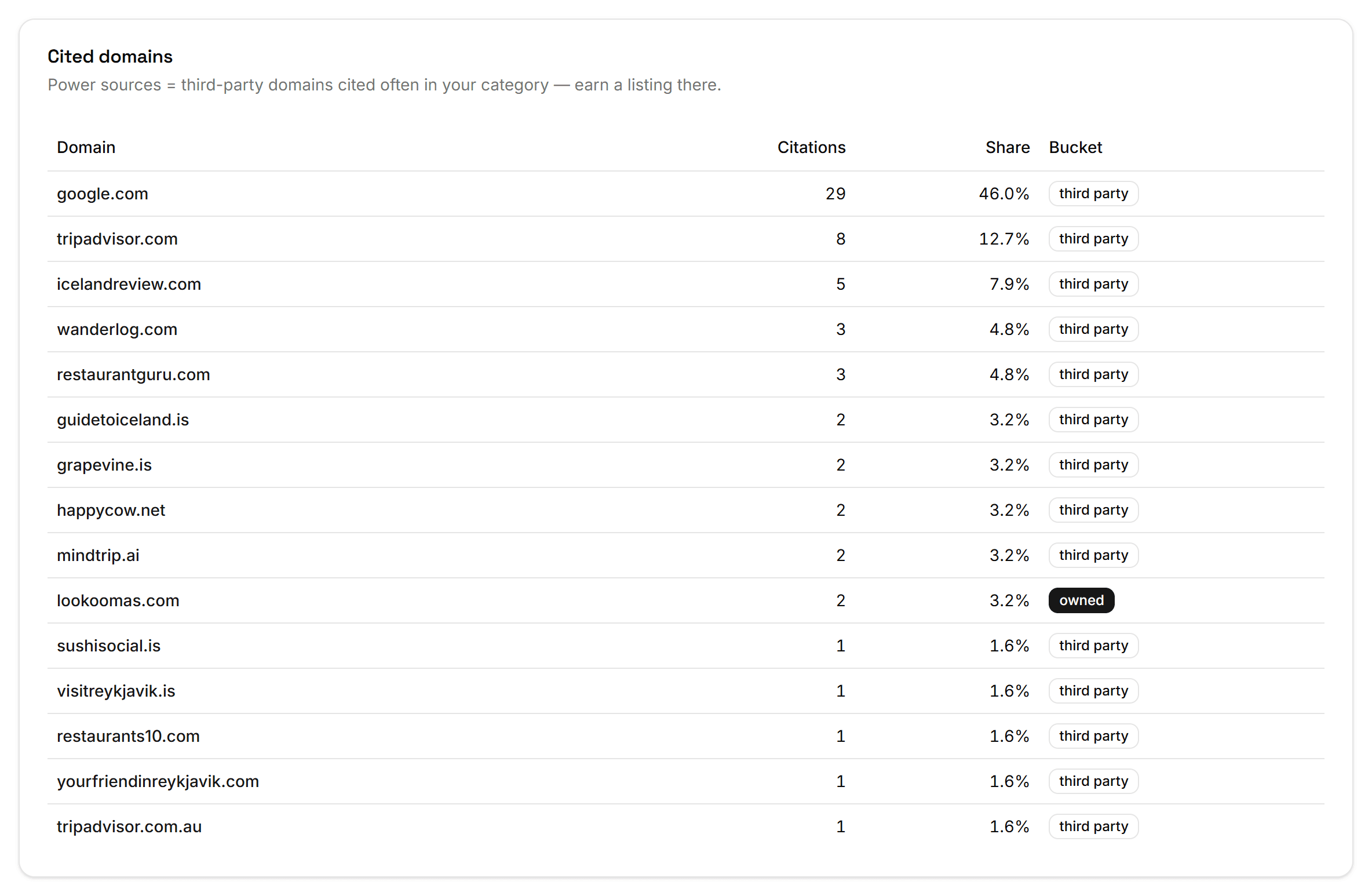
Mention vs Citation: Why 62% of Your AI Citations Never Say Your Name
Being named and being linked are different events with different causes. A brand named in 26.7% of answers held 3.2% of the citations in the same scan.
- Methodology
When Your AI Visibility Tool Is Tracking the Wrong Brand
A tool once reported 30 mentions that were 28 references to a fictional character. Here is the gate that prevents it, and the six real mentions our own scan threw away to keep it.
- Technical SEOcorrected
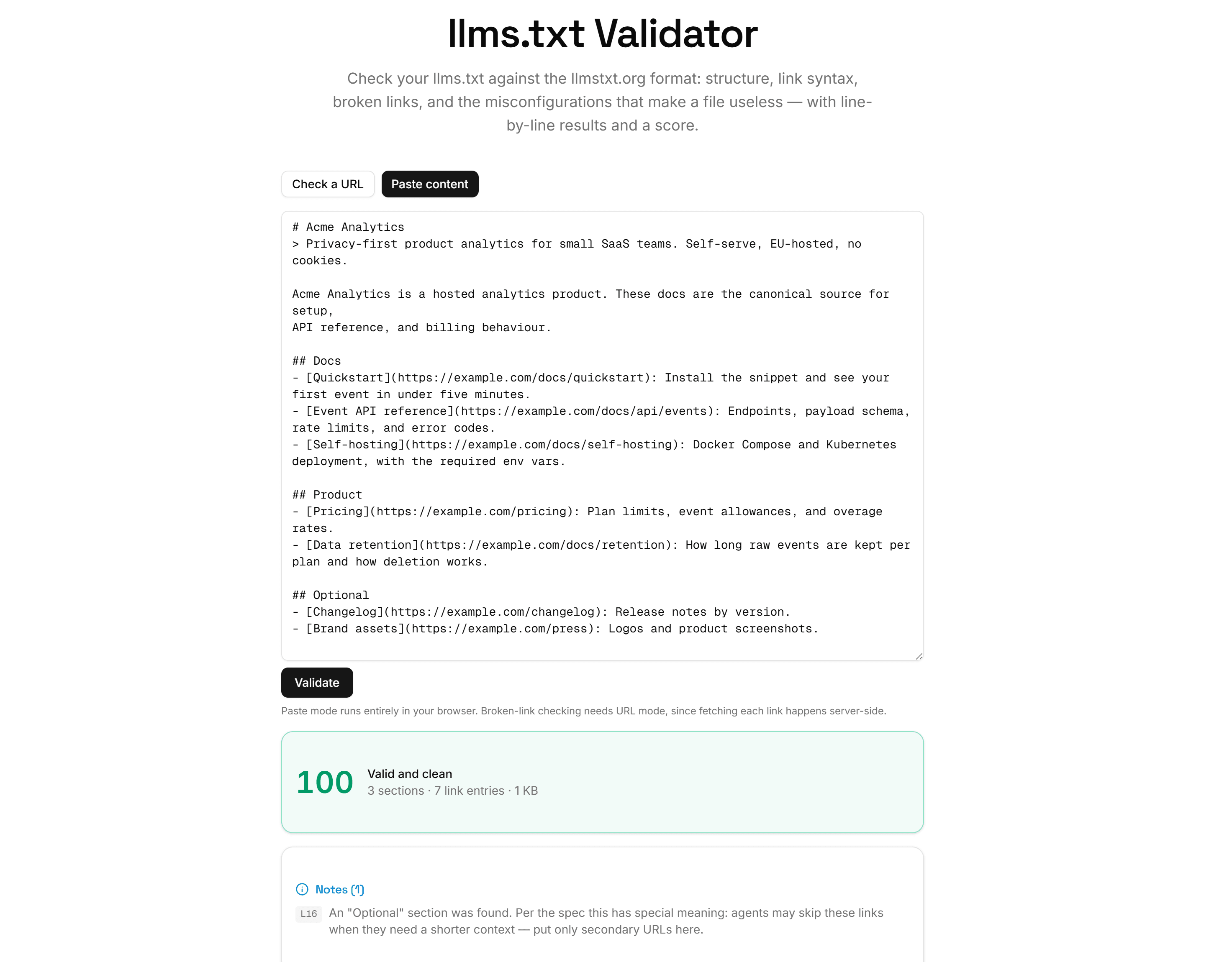
Is llms.txt Worth Shipping in 2026? What 137,000 Sites Showed
Ahrefs found 97% of llms.txt files get zero AI-crawler traffic and no major engine has confirmed reading one. The file still has exactly one job worth doing.
- Technical SEOcorrected
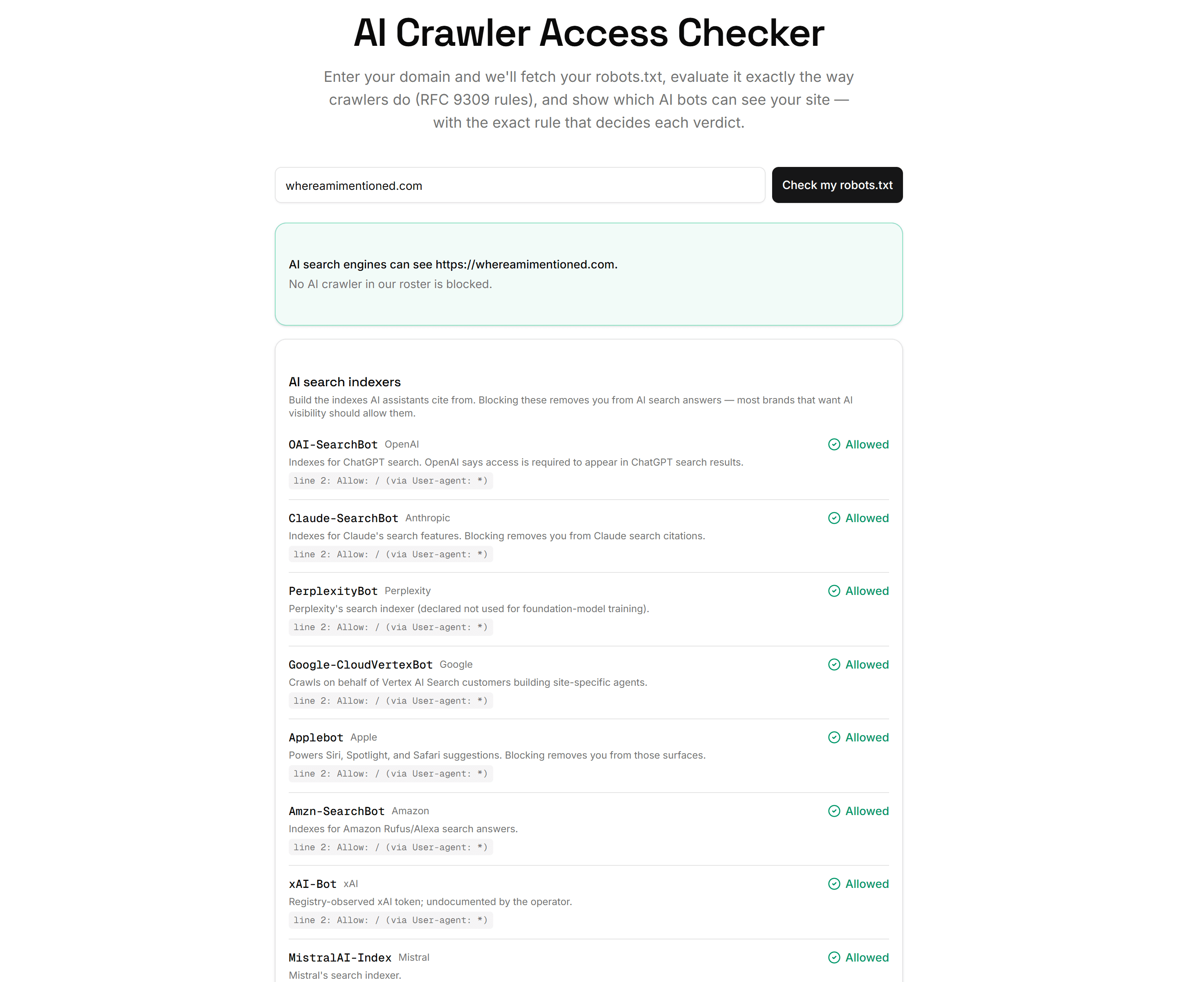
Blocking GPTBot Does Nothing to ChatGPT Search. Check the Other Token.
Training crawlers, search indexers, user-fetchers and control tokens are four different things sharing one file. Confusing them is how sites disappear from AI answers by accident.
- Pricing
What One AI Visibility Scan Actually Costs: $2.14 for 15 Answers
Real per-answer costs from a real scan: 26.5¢ on GPT-5.5, 5.4¢ on Gemini. The engine that cost five times more scored four times lower.